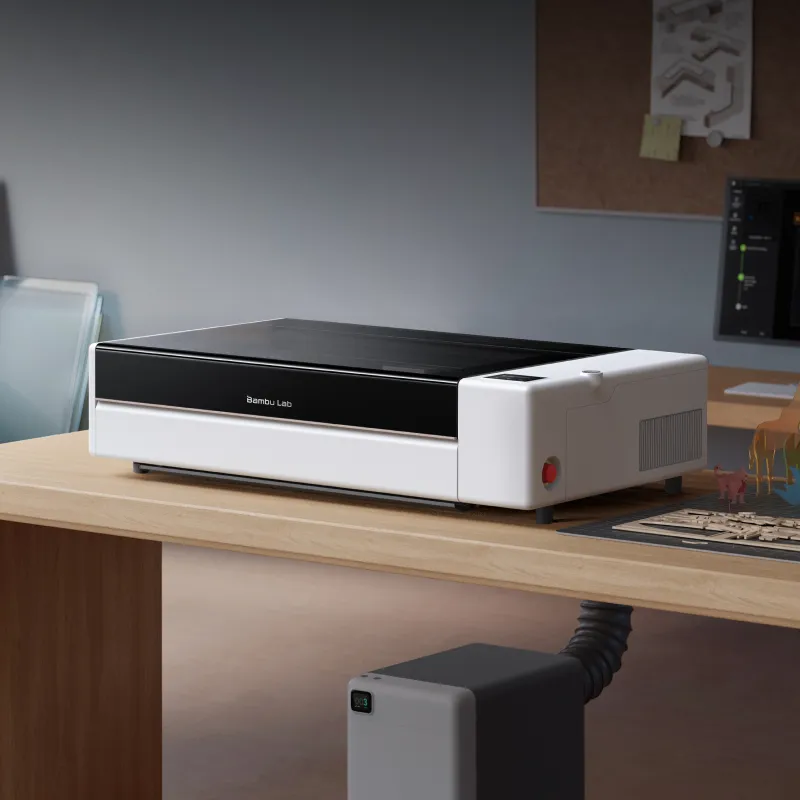
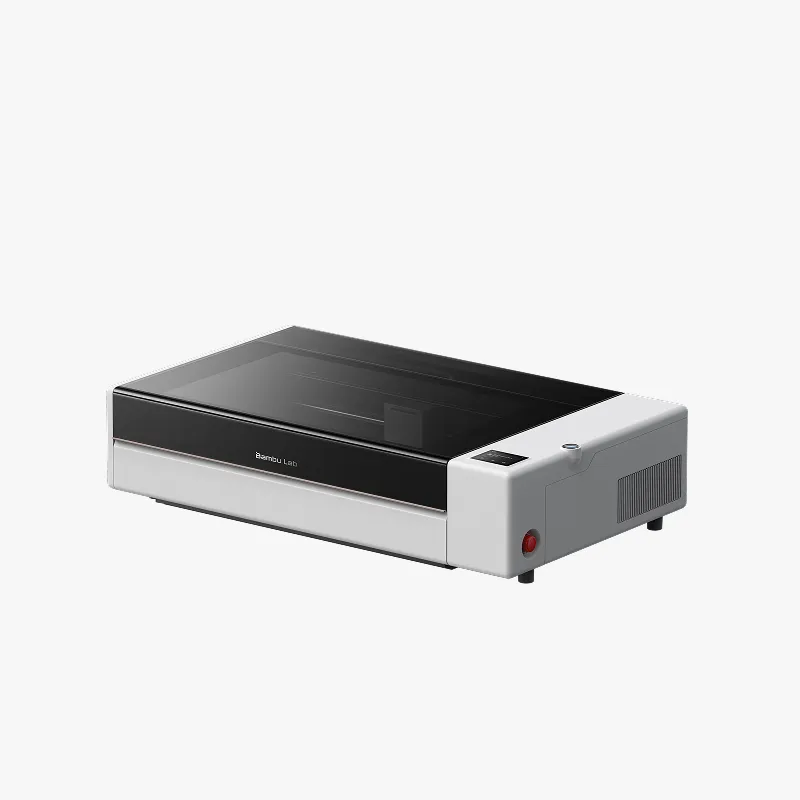
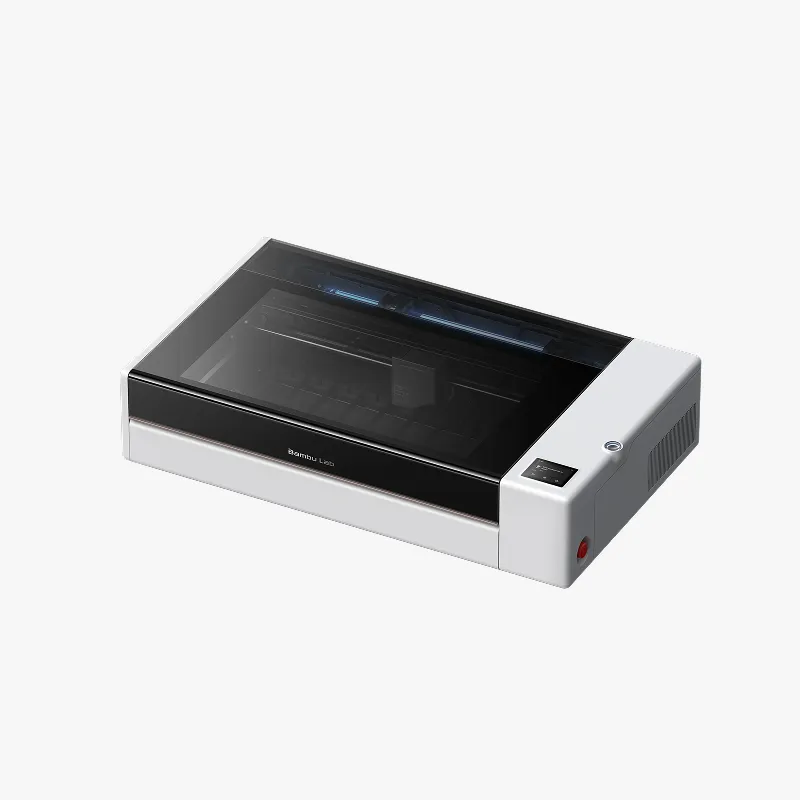
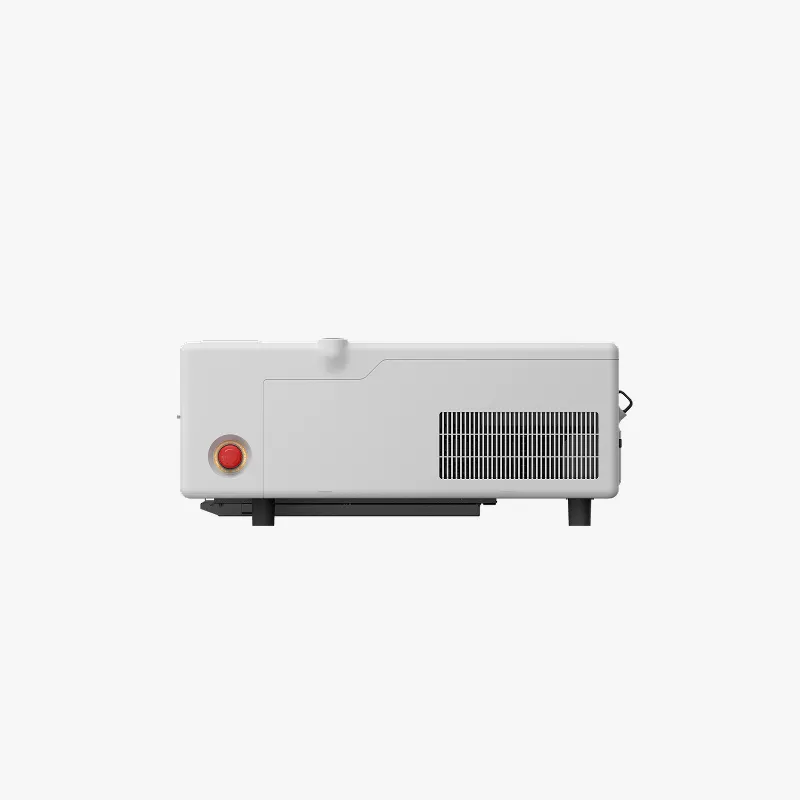
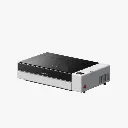
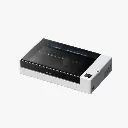
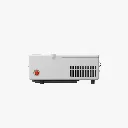
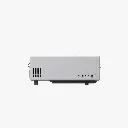
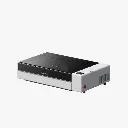
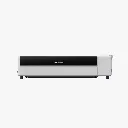
Powerful, precise and hassle-free
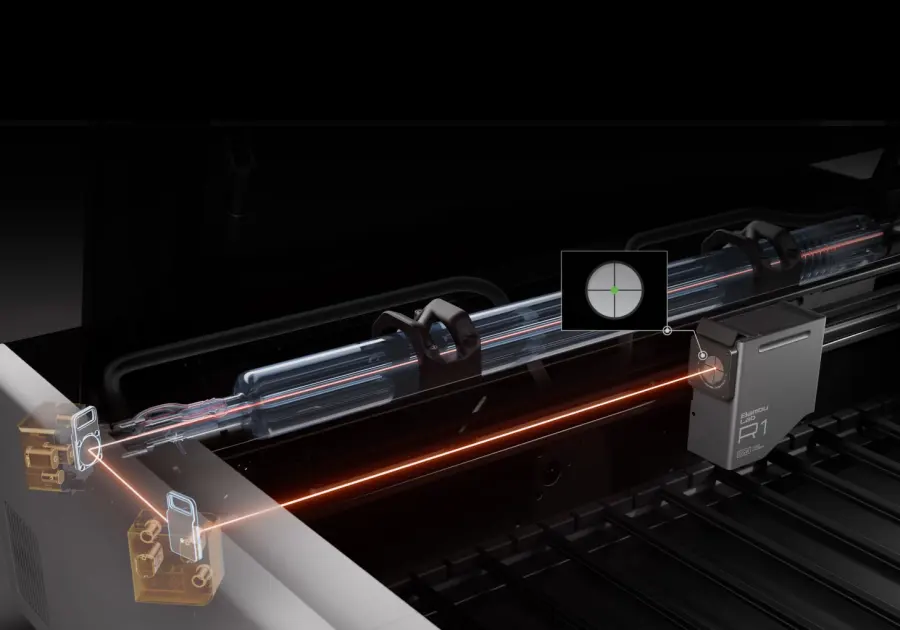
Three things that set R1 apart from most desktop CO₂ lasers.
See what you can make with R1
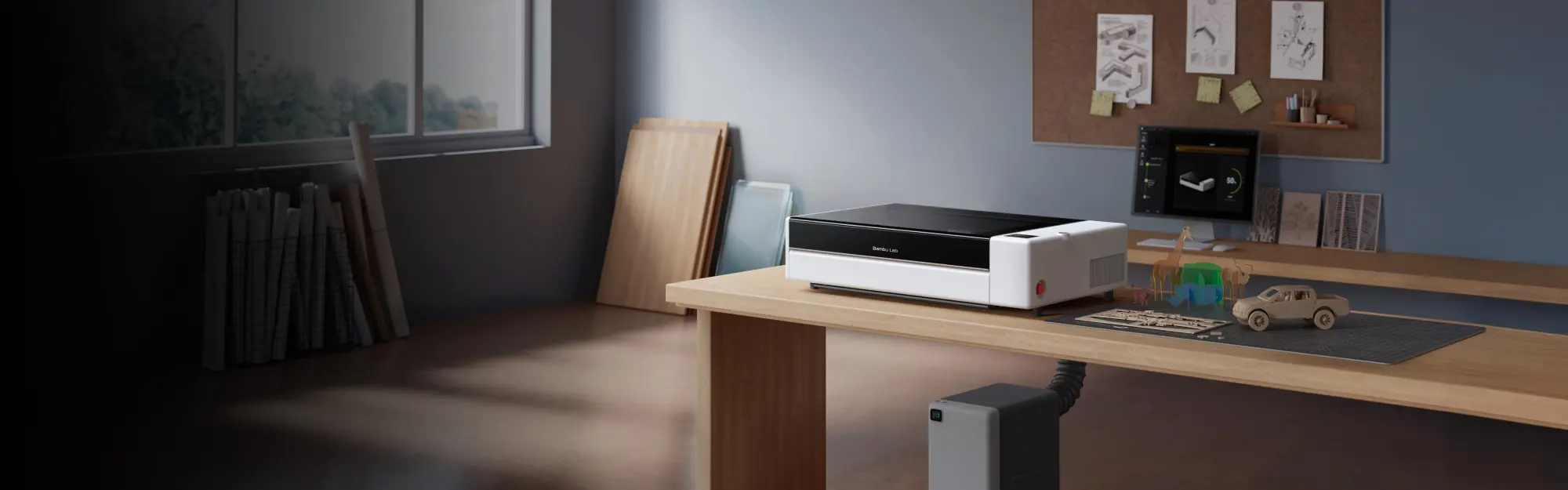
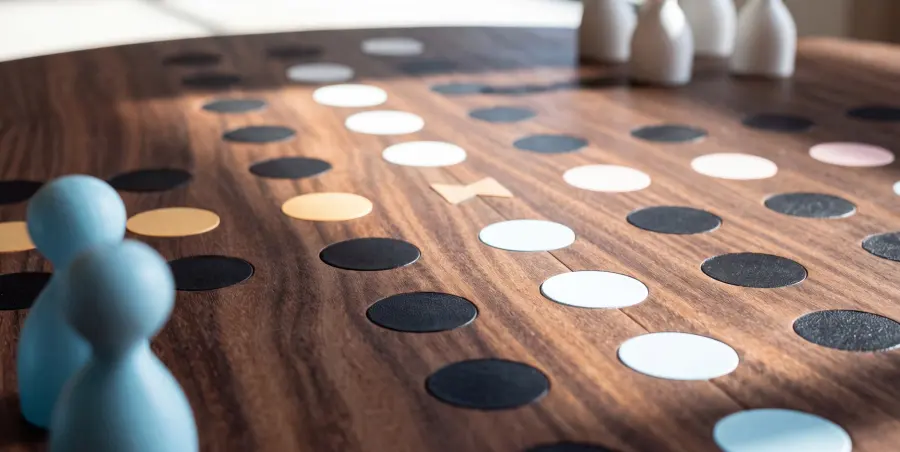
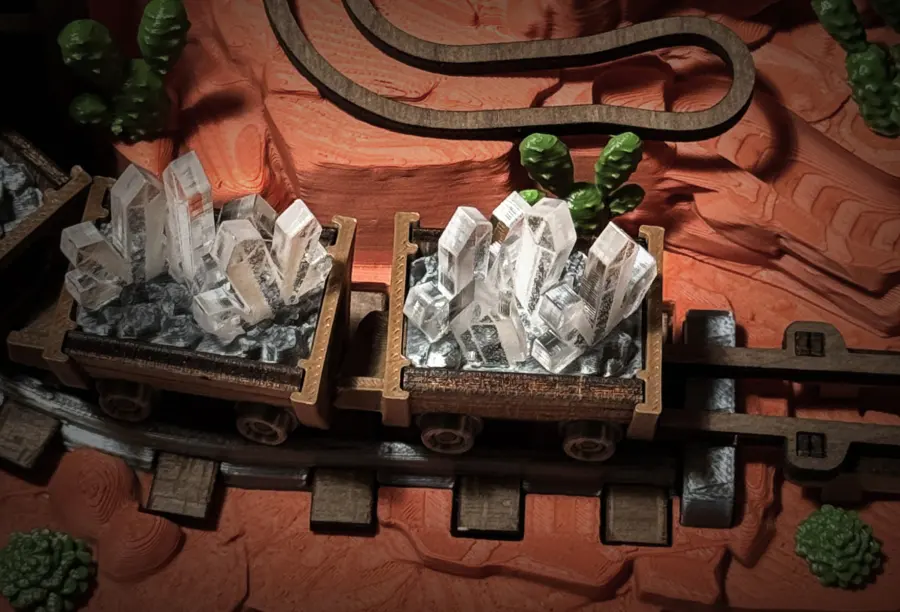
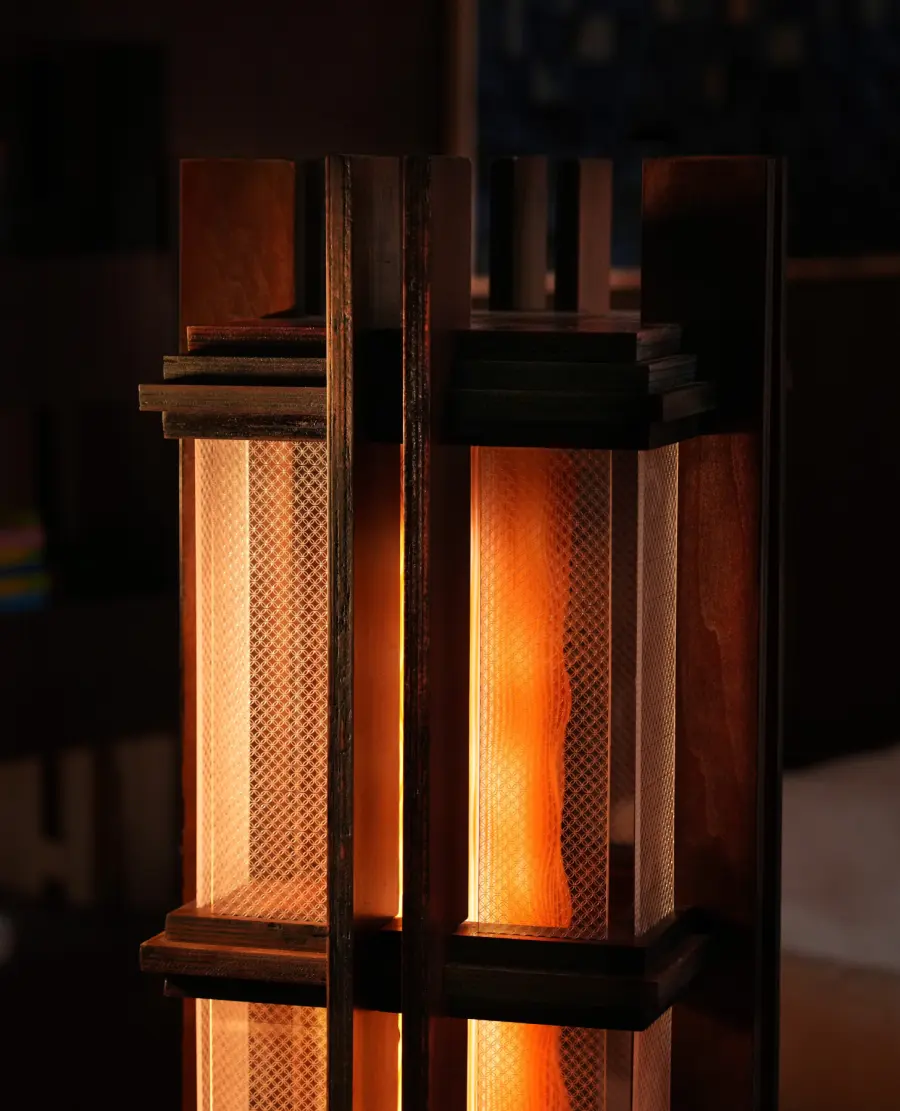
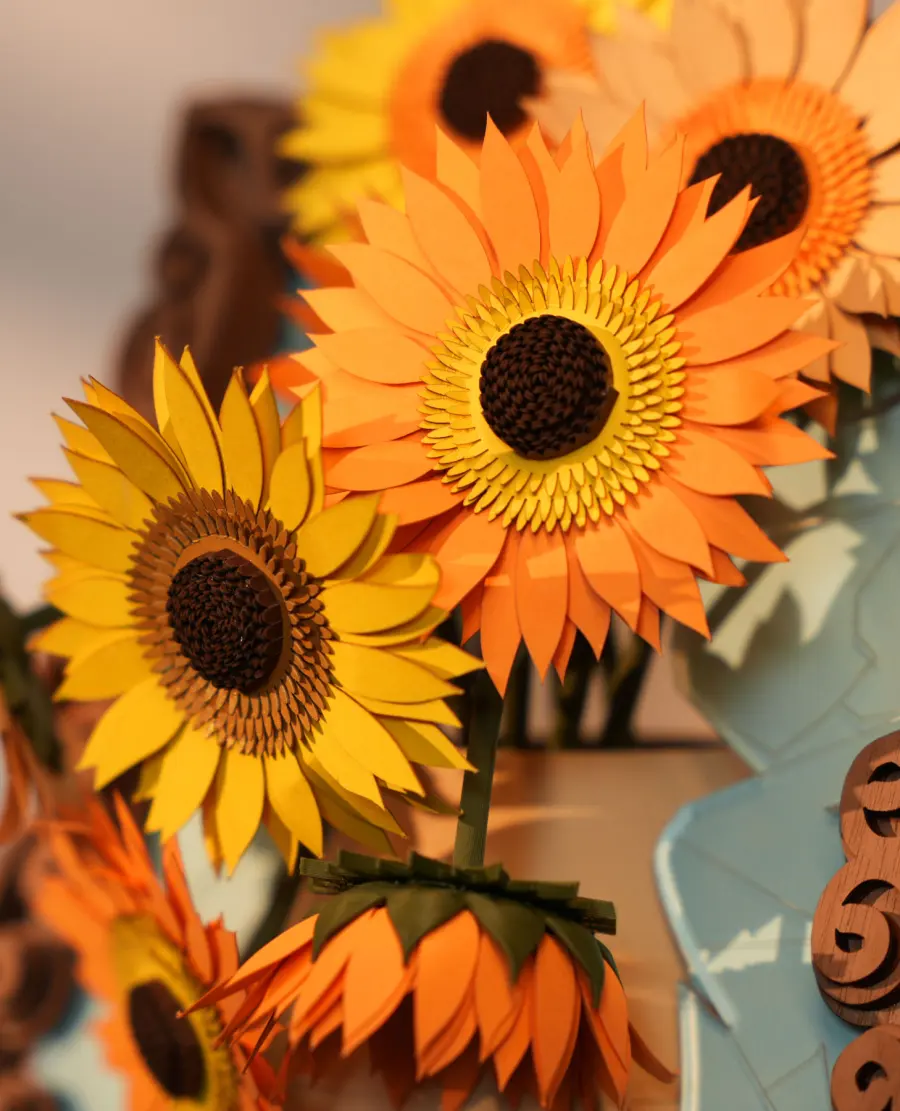
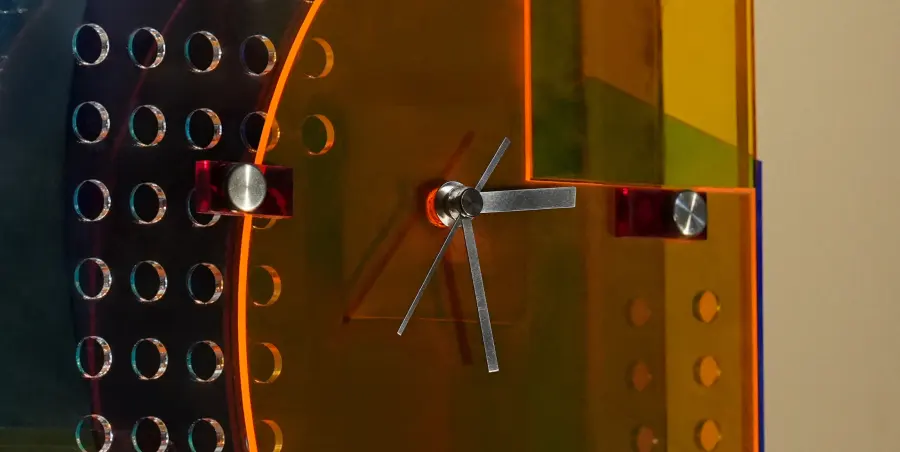
Combine laser-cut parts with prints from your Bambu Lab 3D printer and you can make furniture, lamps, games and décor that no single machine could achieve on its own.
Bring out the best in every material
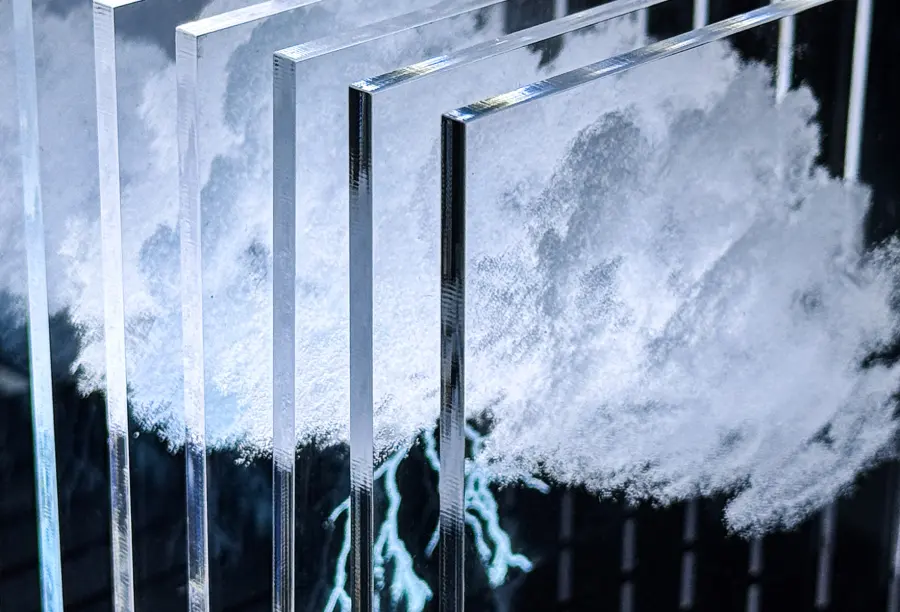
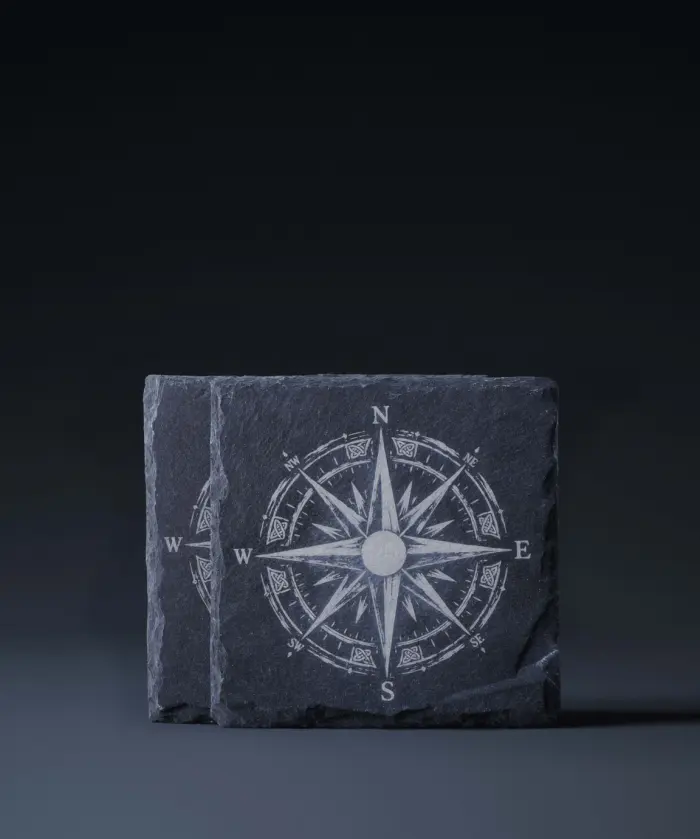
The 55 W CO₂ laser works across a wide range of materials, each with its own character. Clear acrylic, for example: a diode laser can’t handle it, R1 can.
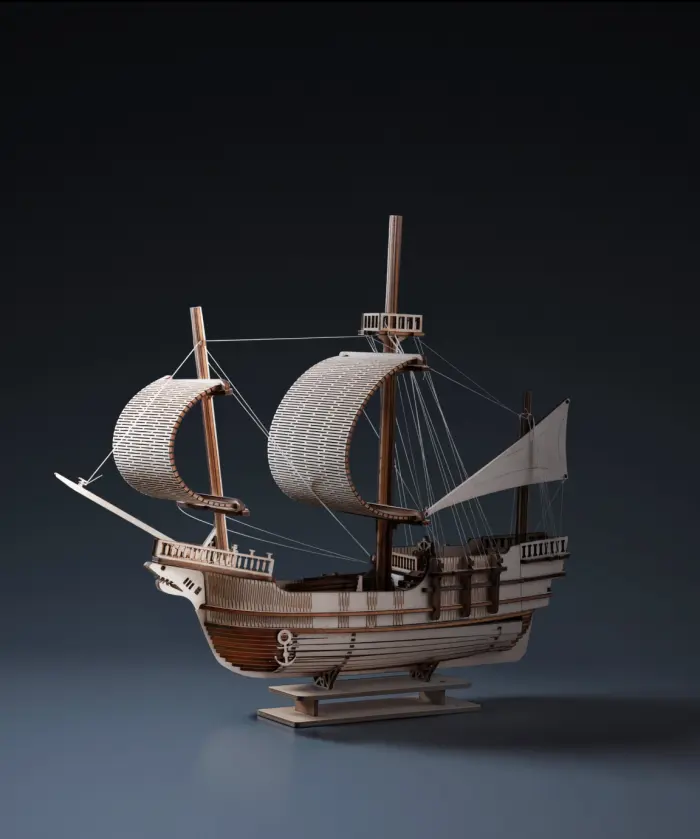
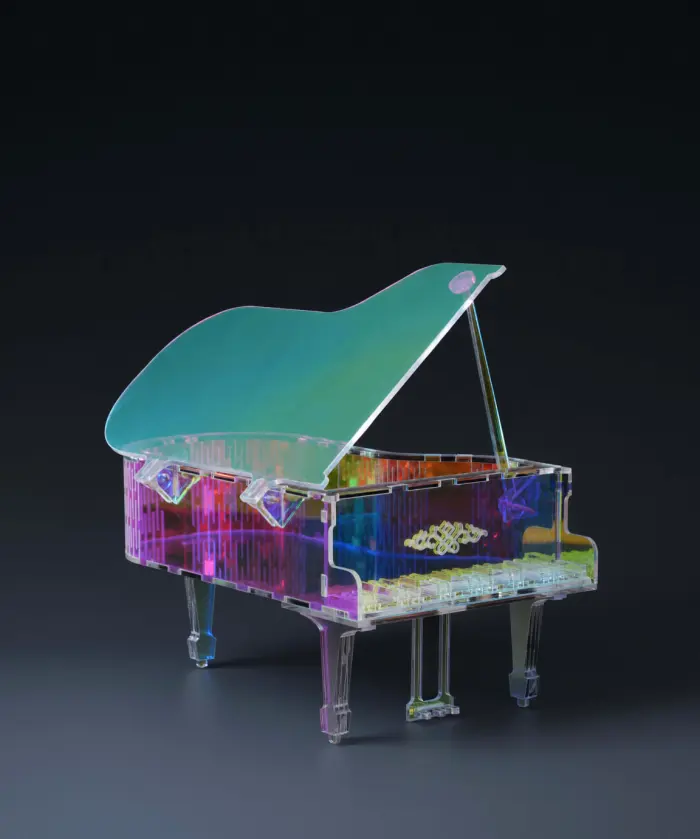
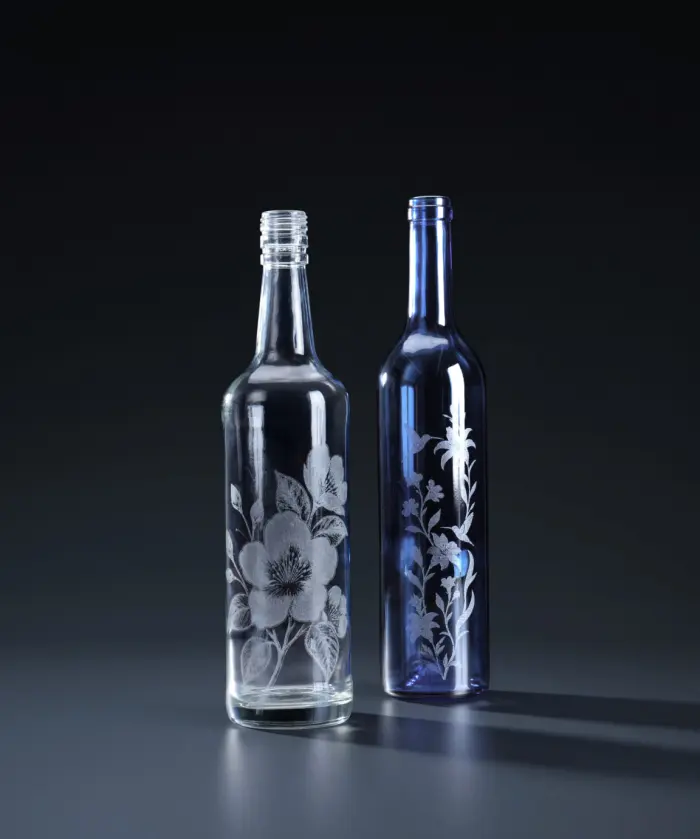
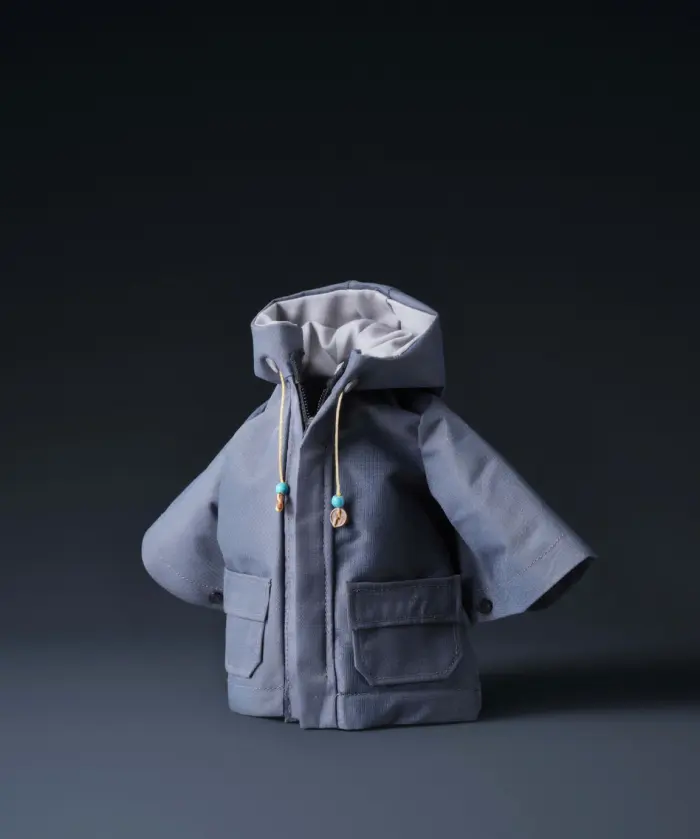
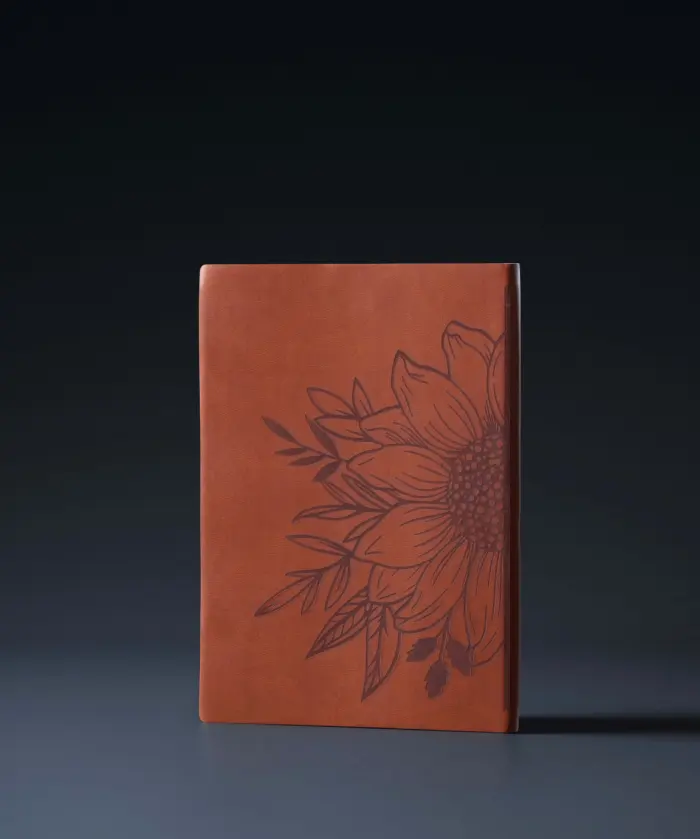
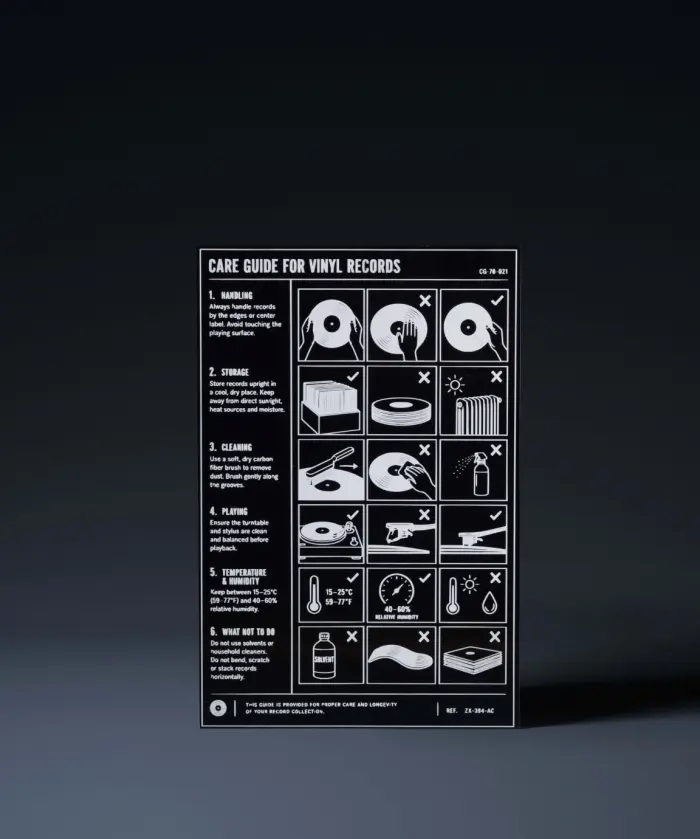
Cut + engrave: also paper, card, EVA foam and shell.
Engrave only: coated metal, glass and ceramics. Bare metal can’t be engraved with a CO₂ laser.
Precision where it pays off
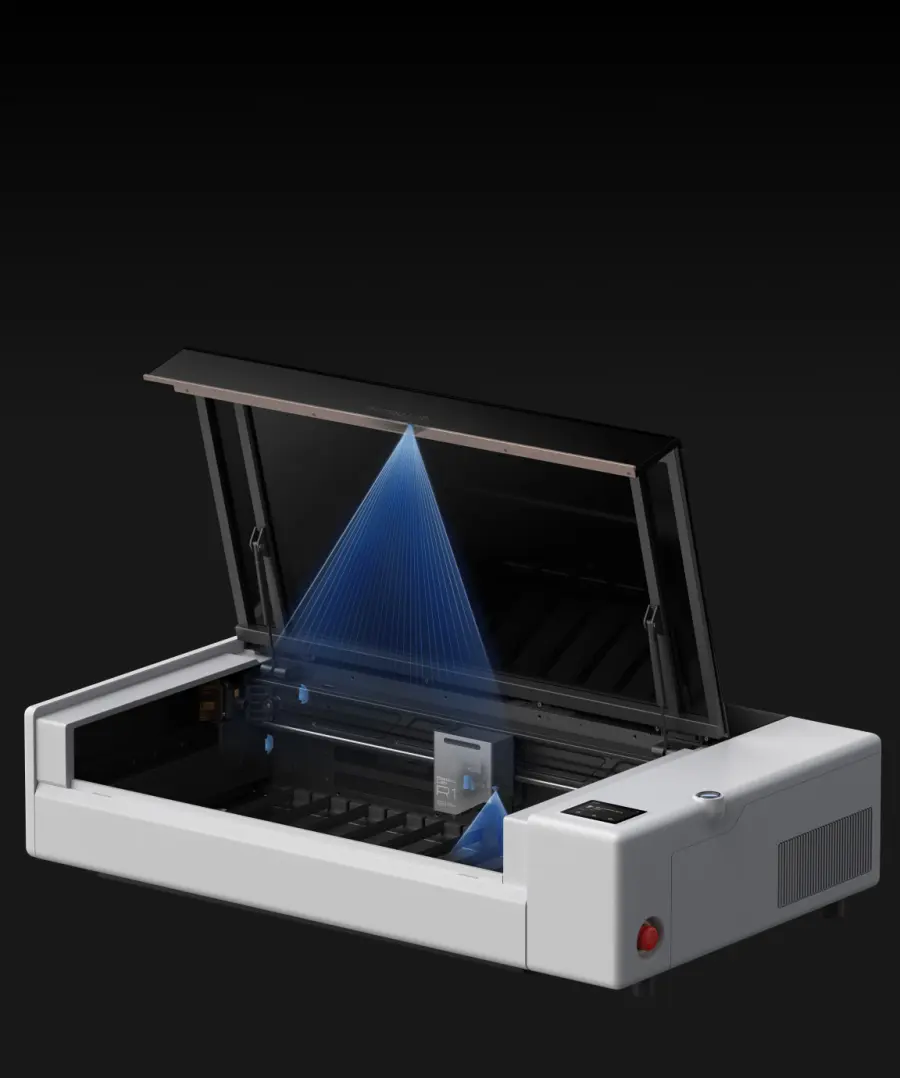
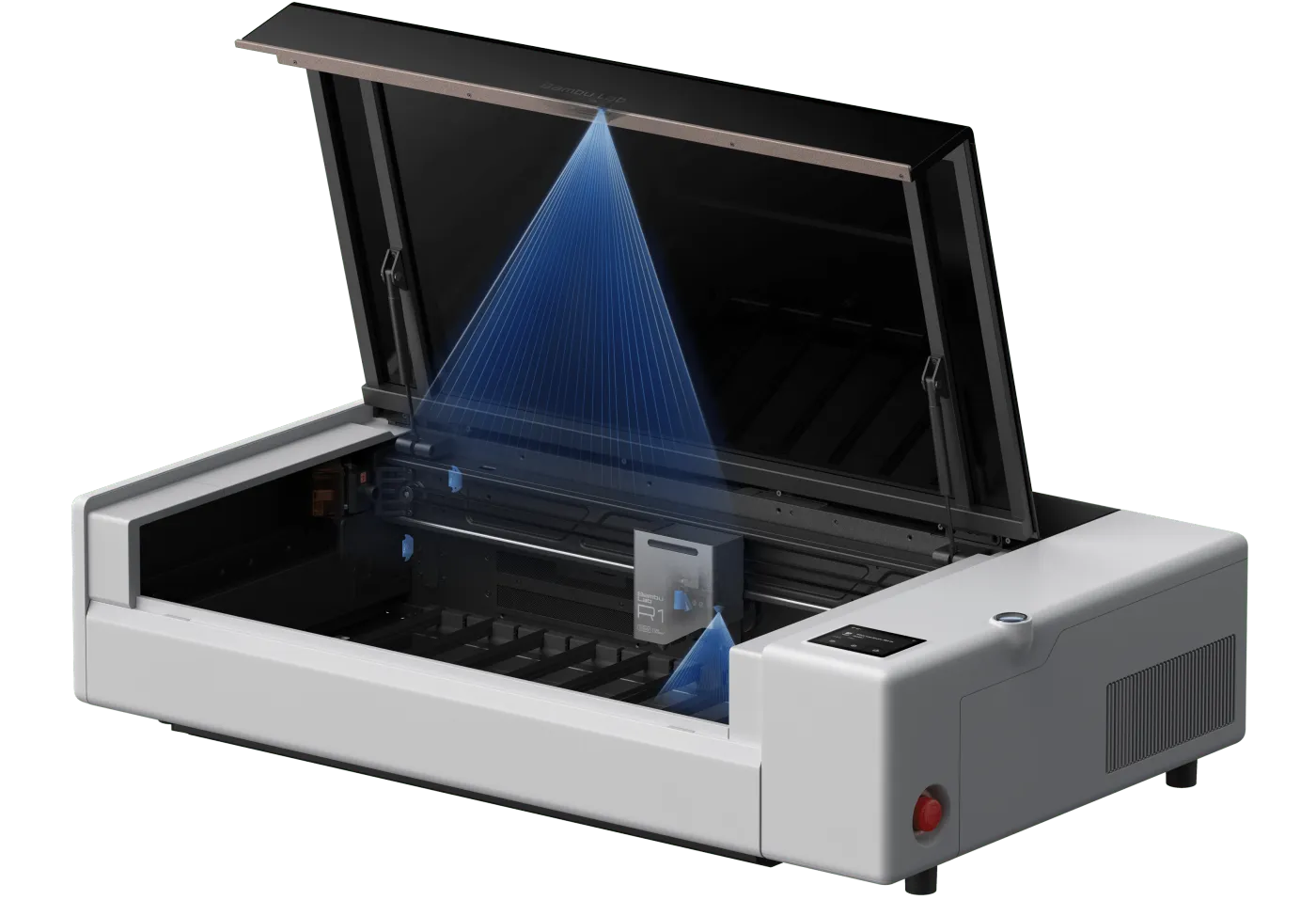
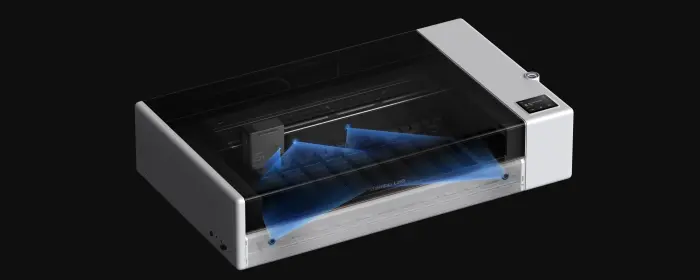
Drop in your workpiece: crooked, curved or tiny. R1 finds it, reads the surface and tracks every move.
On cups, spheres and uneven surfaces, height sensing follows every rise and fall, keeping your engraving equally sharp everywhere.
Surface measurement stays accurate on glass and clear acrylic, so your engraving lands exactly where it should.
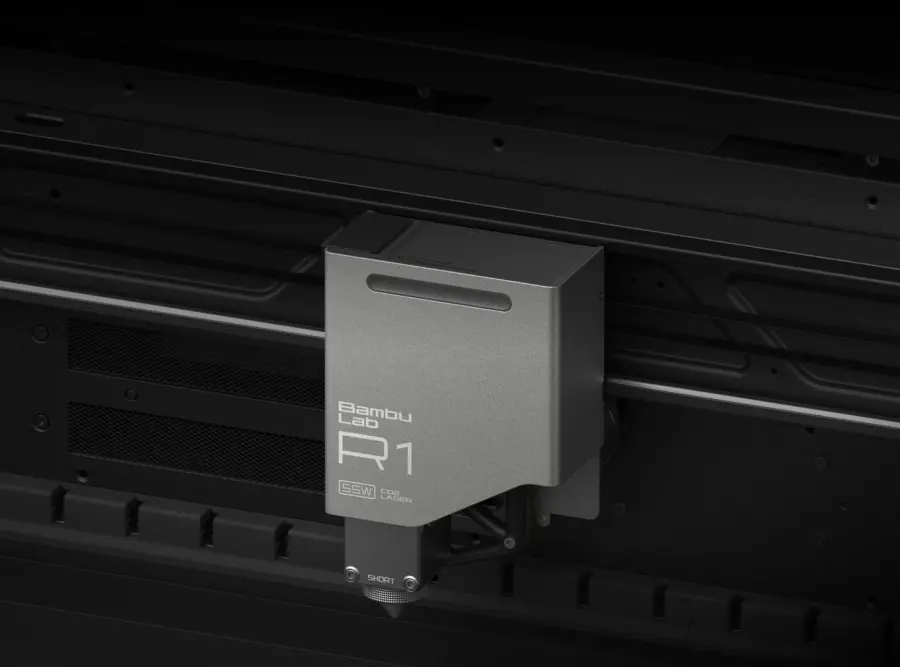
The toolhead camera pinpoints small objects and places fine detail exactly where you want it.
Cut around a printed design, trim a sticker or follow a drawn outline: the camera traces the edge and keeps the cut on track.
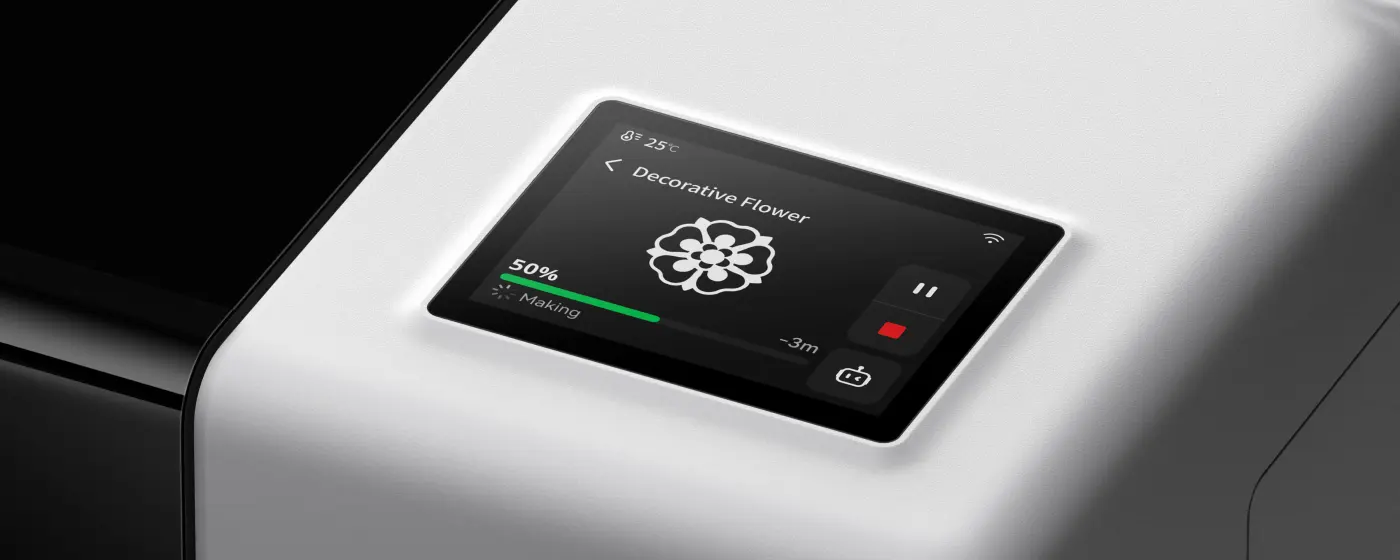
Drop in the material. Skip the settings.
Follow every job in real time, watch the optical path calibrate and check your machine’s health status. All without a computer.
Place Bambu Lab material in R1 and it selects the right power and speed by itself. No test grids, no hunting for parameters.5
The same Bambu account, the same MakerWorld and a familiar workflow in Bambu Suite (Windows and macOS), via Wi-Fi or USB. Already own a Bambu Lab printer? Then you’ll feel right at home.
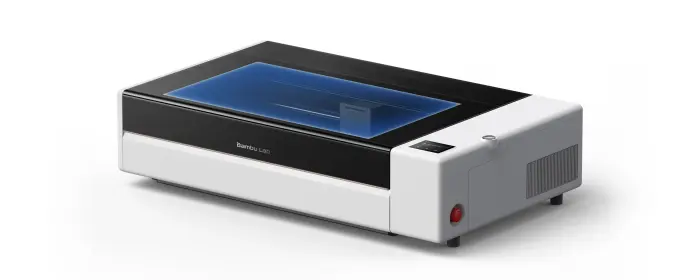
R1 offers the work area of a typical CO₂ laser while taking up about a third less space.6
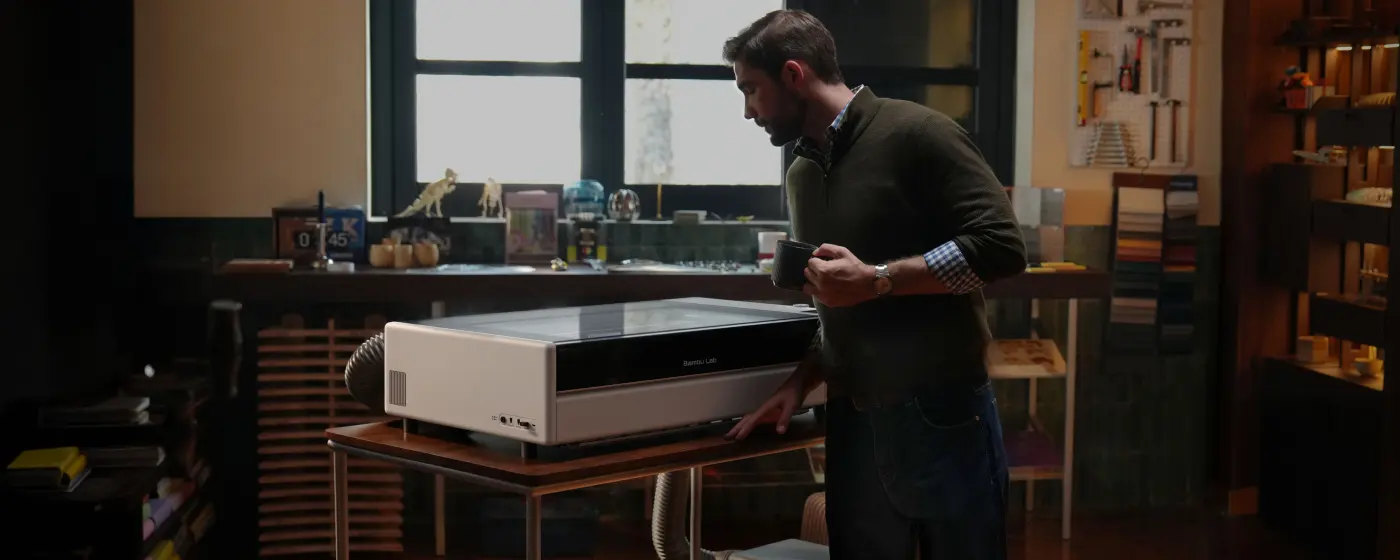
Safe by design, for every workspace
R1 is Class 1 under IEC 60825-1 in standard enclosed use. Laser radiation stays inside the enclosure, so you don’t need safety glasses or a dedicated laser room.4 That makes R1 a strong choice for classrooms, offices and makerspaces.
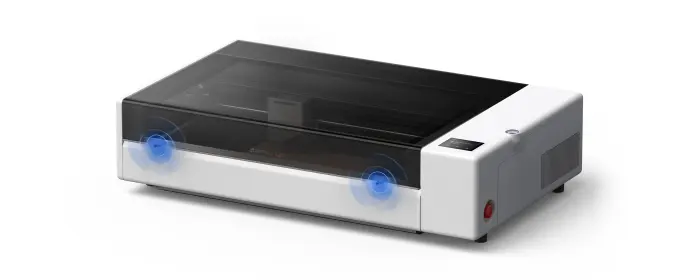
Taller. Rounder. Longer. Thicker.
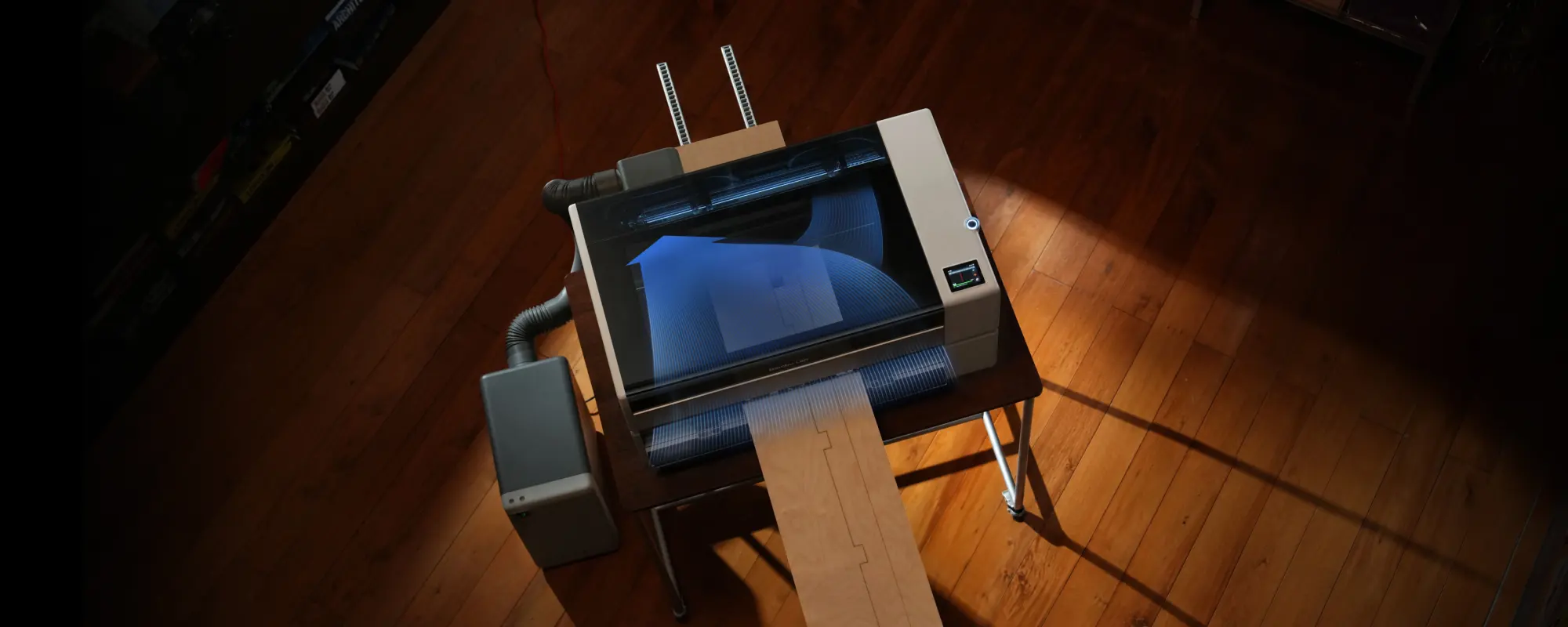
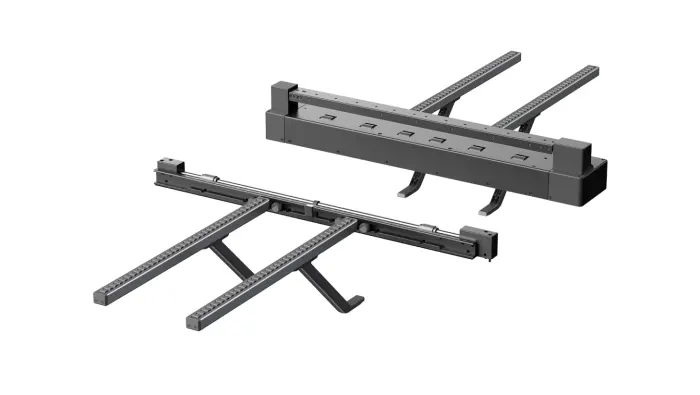
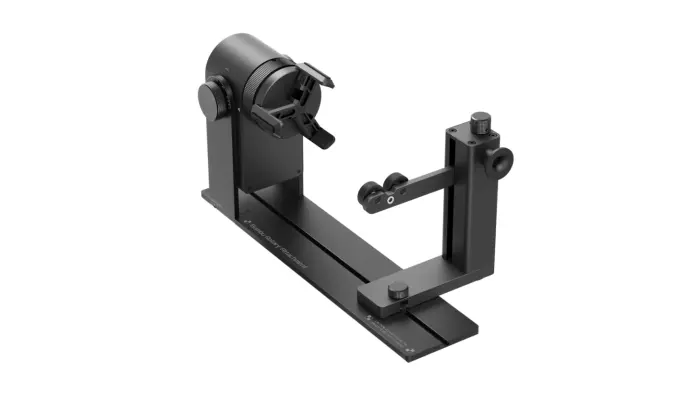
Expand your R1 for taller objects, round pieces, thicker stock and extra-long boards.3
R1 or an H2D with laser module?
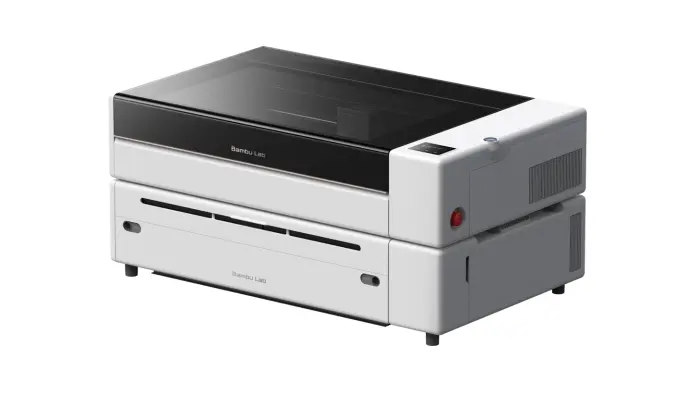
Torn between R1 and a Bambu Lab H2 printer with a laser module? These are the key differences.
| Bambu Lab R1 | H2 series with laser module | |
|---|---|---|
| Laser type | 55 W CO₂ laser | 10 W or 40 W diode laser (455 nm) |
| Clear acrylic | Cut and engrave | Not possible, opaque acrylic only |
| Work area | 600 × 300 mm, up to 600 × 3000 mm with Conveyor | 310 × 270 mm (10 W) / 310 × 250 mm (40 W) |
| Working height | 0–58 mm, up to 248 mm with Riser Base | up to 280 mm (10 W) / 265 mm (40 W) |
| Max. engraving speed | 1000 mm/s | 400 mm/s (10 W) / 1000 mm/s (40 W) |
| Metal | Engraves coated metal only | Can also process sheet metal |
| Automatic optical path alignment | Yes | Not applicable |
| Laser class | Class 1 (enclosed) | Class 1 (enclosed) |
| 3D printing too | No, dedicated laser cutter | Yes, 3D printer with laser module |
Want 3D printing and laser cutting in one machine? View the Bambu Lab H2 series.
All specs at a glance
| Laser type | 55 W CO₂ laser |
| Cut & engrave | Wood (plywood), acrylic (incl. clear), leather, fabric, paper, EVA foam, shell |
| Engrave only | Coated metal (not bare metal), glass, ceramics |
| Max. cutting thickness in a single pass | Short focus (standard): 15 mm walnut plywood / 20 mm acrylic Medium focus: 18 mm / 20 mm Long focus: 18 mm / 20 mm (faster than medium at the same thickness) |
| Work area | 600 × 300 mm; with Conveyor 600 × 3000 mm |
| Max. material size | 710 × 380 mm; with Conveyor up to 610 mm wide |
| Working height | 0–58 mm; up to 248 mm with Riser Base |
| Max. speed / acceleration | 1000 mm/s / 20,000 mm/s² |
| Spot size | Short Ø 0.11 mm · Medium Ø 0.17 mm · Long Ø 0.19 mm |
| Absolute motion accuracy | < 0.1 mm over 600 mm (with Vision Encoder) |
| Air assist pump | 30 L/min at 30 kPa |
| Positioning system | Dual camera + dual laser + dual encoder (TriSense) |
| Positioning accuracy | < 0.2 mm |
| Focusing | Fully automatic laser ranging |
| Supported | Panoramic and detail capture, toolhead positioning, curved surfaces, cylinders, revolve shapes |
| Laser alignment | Fully automatic |
| Also | One-tap setup, autofocus, automatic material recognition5, system health management |
| Certification | Laser Class 14 |
| Safeguards | Lid-open protection, flame detection, automatic fire suppression3 |
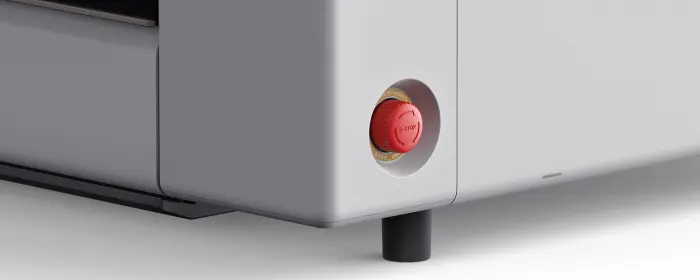
| Safety key & emergency stop | Standard |
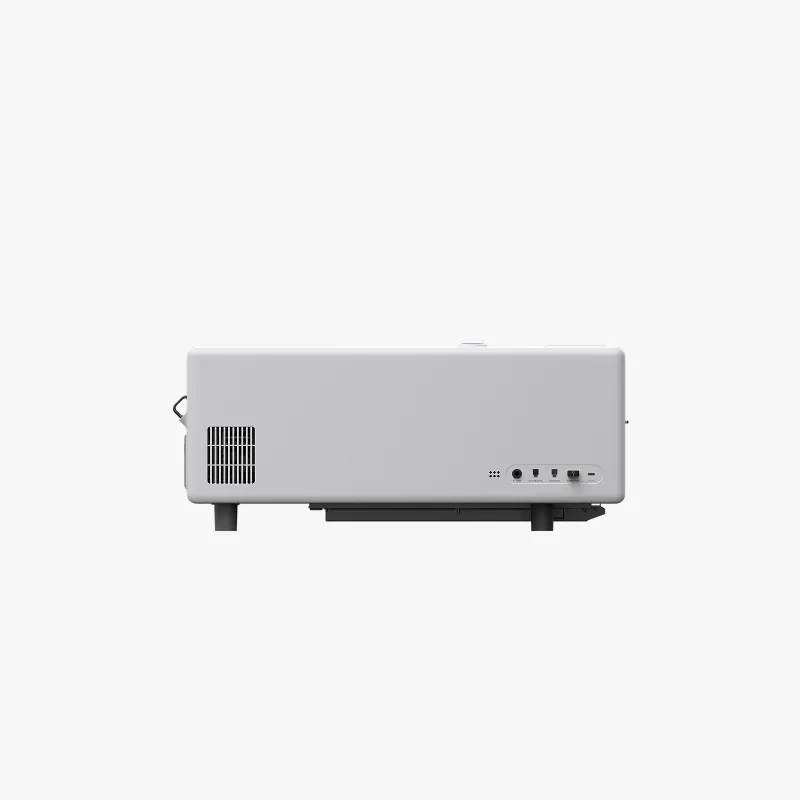
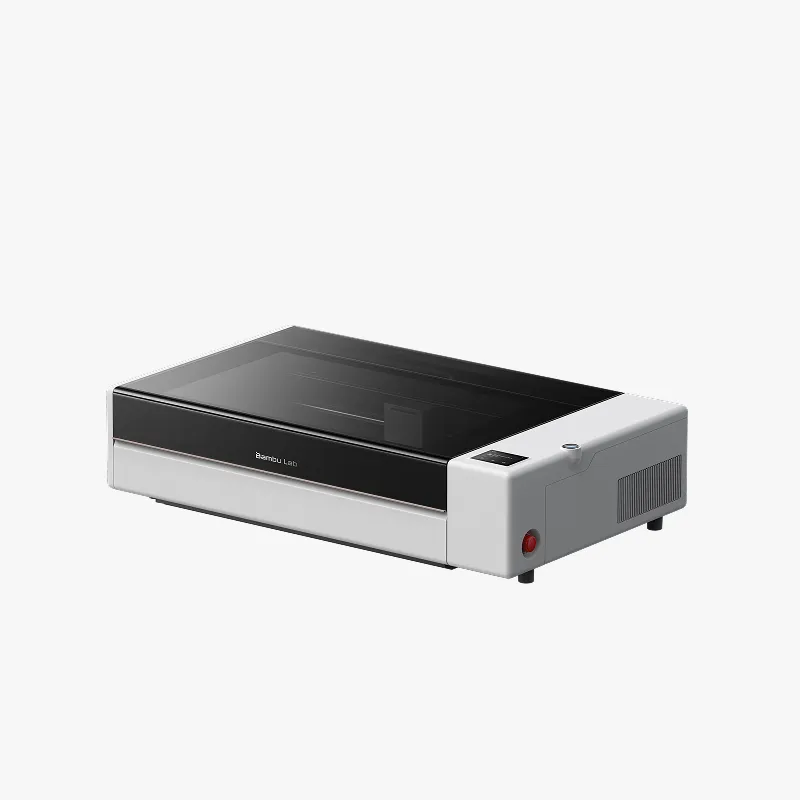
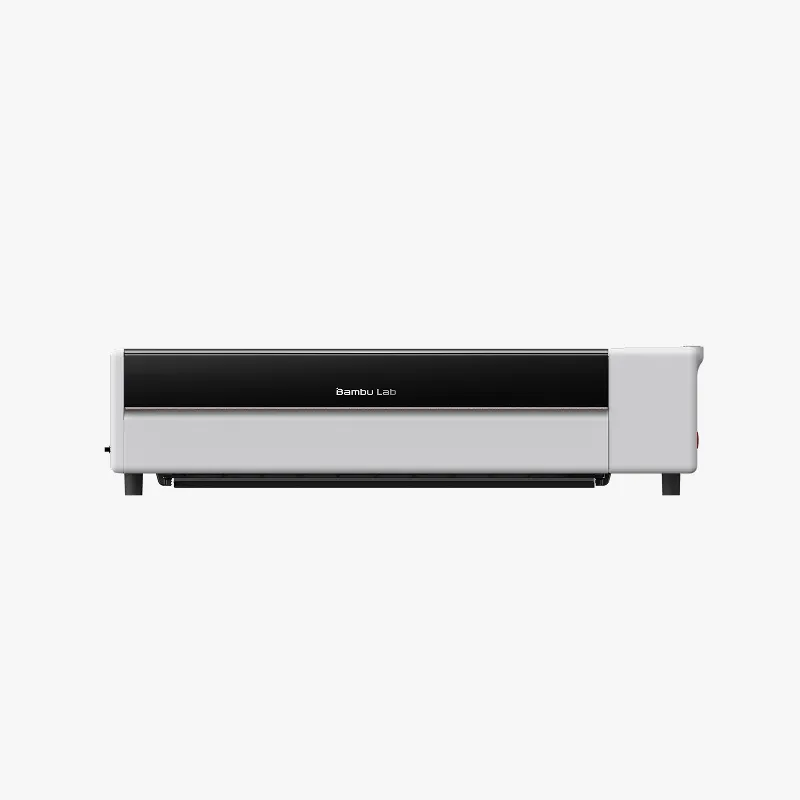
| Dimensions | 940 × 560 × 200 mm |
| Space required | 940 × 660 × 650 mm with lid open; with 100 mm clearance left, right, rear and top: 1140 × 860 × 750 mm With Riser Base: 940 × 660 × 850 mm; with clearance 1140 × 860 × 950 mm |
| With Conveyor | Allow extra space in front of (stock length − 400 mm) and behind (stock length − 550 mm) the machine |
| Package | 1095 × 725 × 310 mm |
| Weight | 33.5 kg |
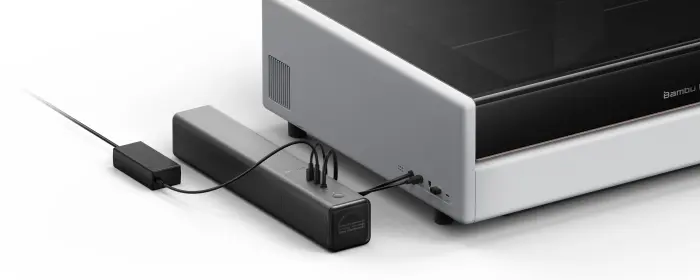
| Input voltage | 100–240 V AC, 50/60 Hz |
| Recommended ambient temperature | 10–30 °C |
| Software | Bambu Suite (Windows, macOS) |
| Connectivity | Dual-band Wi-Fi (IEEE 802.11 a/b/g/n/ac/ax), USB |
Good to know
What is the difference between the focus lenses?
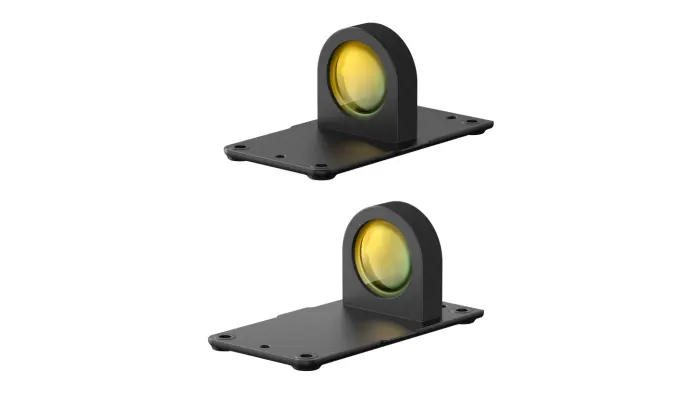
The standard short-focus lens gives the smallest spot and therefore the finest detail. The medium-focus lens strikes a good balance between precision, speed and cutting capability. The long-focus lens has the greatest depth of focus and is ideal for thick materials. Medium and long are sold separately.
Do I need safety glasses or a dedicated laser room?
Not in standard enclosed use: R1 is Class 1 and the radiation stays inside the enclosure. If you use the Riser Base or the Conveyor, the enclosure is no longer fully closed. R1 then becomes a Class 4 laser device, CO₂ laser safety glasses are mandatory and the machine is intended for professional use by trained personnel only.
How often should I calibrate the optical path?
On first use, after moving the machine or exposing it to an impact or strong vibrations, after replacing the laser tube or lenses, and whenever your cutting or engraving results noticeably decline. Bambu Lab recommends calibrating monthly for optimal results. Thanks to automatic alignment, it only takes a minute.
Which air purifier works with R1?
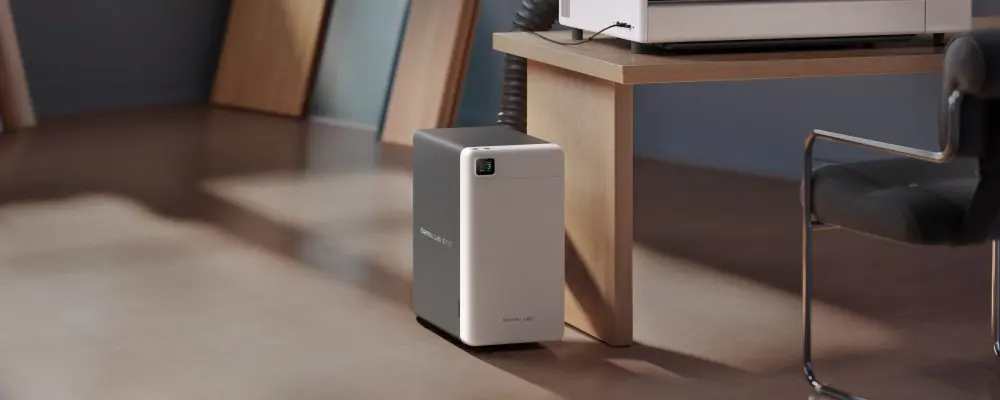
Bambu Lab recommends the E1 Pro air purifier: it works together with R1 and filters smoke and particles using filter cotton, high-performance filters and high-iodine activated carbon. The older Bambu Lab Smoke Purifier also fits, but without the smart link: you operate it manually with the power switch and speed knob.
Which materials are not recommended?
Take care with highly reflective materials and don’t process bare metal, to avoid damage or injury. With materials that can release harmful fumes, such as acrylic, always keep the exhaust clear, make sure the room is well ventilated and follow local emission regulations.
Get off to a smooth start with your R1
We don’t just help you choose, we help you get started. With our launch package we install R1 on site at your premises and give you 2.5 hours of personal guidance, so your first projects succeed straight away.
- Short focus (standard): 15 mm plywood / 20 mm acrylic. 18 mm plywood requires the medium- or long-focus lens, sold separately. All references to wood refer to plywood.
- Based on image engraving at maximum speed and acceleration settings: R1 at 1,000 mm/s and 20,000 mm/s², compared with a typical CO₂ laser at its maximum settings.
- Sold separately: Riser Base, Conveyor, Rotary Attachment, medium- and long-focus lenses, Vision Encoder, Auto Fire Extinguishing System and E1 Pro air purifier.
- Laser Class 1 under IEC 60825-1 in standard enclosed use. With the Riser Base or Conveyor the enclosure is no longer fully closed: R1 then becomes a Class 4 laser device, CO₂ laser safety glasses are mandatory and the machine is intended for professional use by trained personnel only.
- Automatic material recognition works with official Bambu Lab materials only.
- Comparison of external footprint with representative CO₂ lasers with an equivalent work area, as measured by Bambu Lab. Actual size varies by model.
All product data is based on Bambu Lab’s internal testing; actual results may vary. The projects shown are for illustration only. Thanks to the creators: @janberrydesign, @Daniel4d, @Makim and @miyabi. Images: Bambu Lab.